Choose feed motion to help reduce puckering, layer slippage and harsh thread tightening instead of relying only on mechanical adjustment.

Brother NEXIO S-7250A Premium Electronic-Feed Industrial Sewing Machine
$1,990.00
$2,395.00
NEXIO electronic-feed industrial straight stitch
Brother S-7250A: when the feed becomes part of the stitch setting
A premium direct-drive plain sewer that replaces a conventional mechanical feed adjustment with Brother's DigiFlex Feed—giving you numerical stitch-length control, programmable feed motion and cleaner, more repeatable sewing across changing materials.
- DigiFlex Feed uses a stepping motor to control feed timing, direction and stitch length electronically.
- Automatic backtack and thread trimming streamline the beginning and end of every seam.
- Premium short-thread trimming helps reduce after-cutting and start-of-seam thread nests.
- Minimum lubrication with a sealed oil tank supports cleaner work on valuable fabrics.
 S-7250A · Premium medium-material package
DigiFlex FeedDirect electronic feed control
5,000 sti/minMaximum at stitch lengths up to 2mm
5mmMaximum stitch length
DB × 1#11–18 medium-material needle range
Three improvements you can feel in everyday production
The advantage is not a novelty stitch count. It is control over how the fabric feeds, how the seam starts and finishes, and how consistently those settings can be repeated.
Programmable backtacks and automatic trimming remove repetitive hand movements, while the Premium trim system leaves shorter thread ends.
Enter stitch length numerically, set speed and sewing programmes at the panel, then reproduce the setup more accurately for repeat work.
Premium specification: Direct Sewing presents this machine as its Premium S-7250A. Brother's P specification uses a double-action trimmer to cut close beneath the needle hole, leaving as little as approximately 3mm of thread. Confirm the P suffix on the current machine plate before publishing or dispatch.
For sewing rooms that need quality to repeat—not just speed
Alteration rooms
Move between garment fabrics and seam types with panel-based stitch length, speed and automatic finishing controls.
Apparel production
Clean, repeatable straight seams on light-to-medium clothing materials from samples through production runs.
Sample makers
Adjust feed motion for challenging fabrics without rebuilding a mechanical feed setting for every new job.
Fine-fabric work
Minimum lubrication, a sealed oil tank and electronic feed control help protect appearance on valuable materials.
Repeat operations
Programme backtacks, seam counts, speed and pitch changes to reduce variation between pieces and operators.
Training rooms
Set a sensible speed ceiling, display stitch length numerically and introduce advanced functions as skills develop.
This listing is the medium-material configuration. It is a versatile garment and general-sewing machine—not the separate 7mm heavy-material S-7250A version and not a compound-feed machine for saddlery, heavy webbing or bulky upholstery assemblies.
Integrated controls, direct drive and a clean industrial head
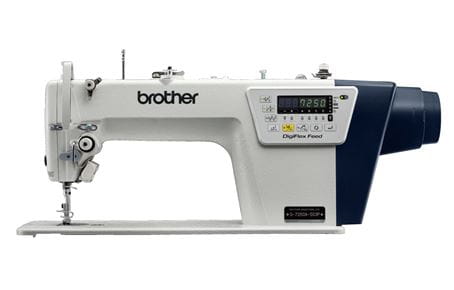
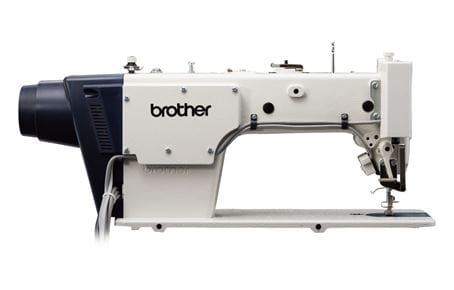
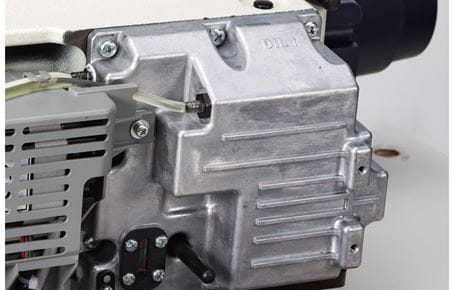
DigiFlex Feed
Move from a mechanical feed dial to digital control
The feed dog is driven by a stepping motor, allowing the machine to control feed timing and motion in coordination with needle position. Select a suitable feed locus and enter stitch length as a numerical value for more repeatable setup.
- Electronic control of feed timing and direction
- Numerical stitch-length setting at the panel
- Faster, smoother transition into reverse sewing
- Feed motion can be changed to address sewing behaviour
- Settings can be reproduced across repeat operations
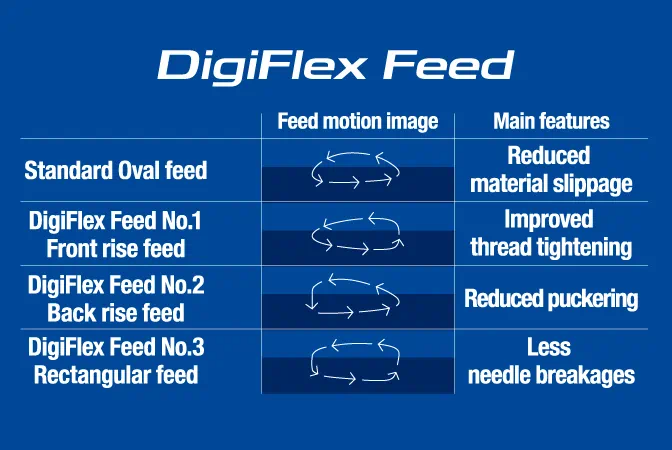
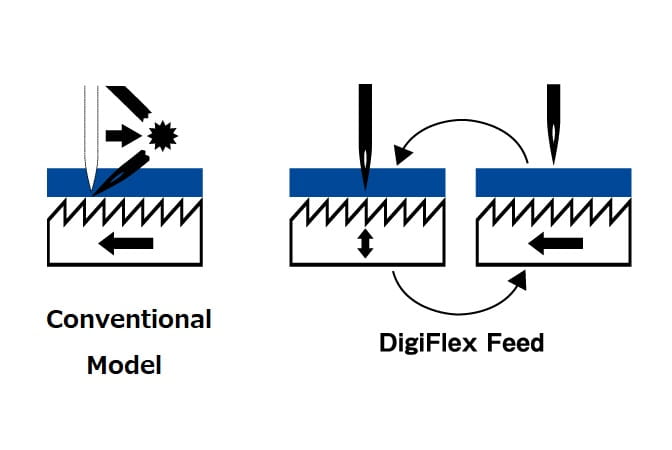
Smarter reverse control
Feed timing that works with the needle—not against it
Brother combines selectable feed motion, fast stepping-motor reverse response and needle-position sensing. The system controls the timing of reverse feed to help avoid forcing the material while the needle is still vulnerable.
This is especially valuable at seam starts and ends, where frequent direction changes can create impact, noise, stitch disturbance and unnecessary needle stress on a conventional mechanism.
Cleaner stitch formation
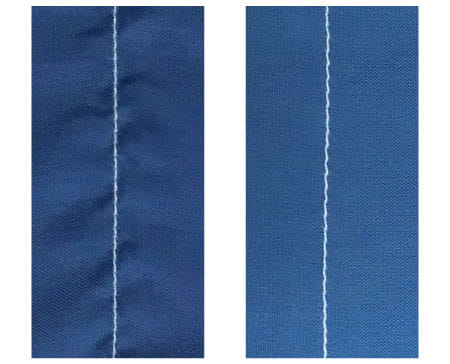
Tune feed motion to help control puckering and layer shift
DigiFlex Feed changes more than stitch length. By selecting a feed motion suited to the fabric, the operator can influence how the material moves and how the thread tightens into the seam.
- Helps reduce puckering on sensitive fabrics
- Helps reduce material slippage between layers
- Supports smoother handling through difficult operations
- Reduces repeated mechanical feed adjustment
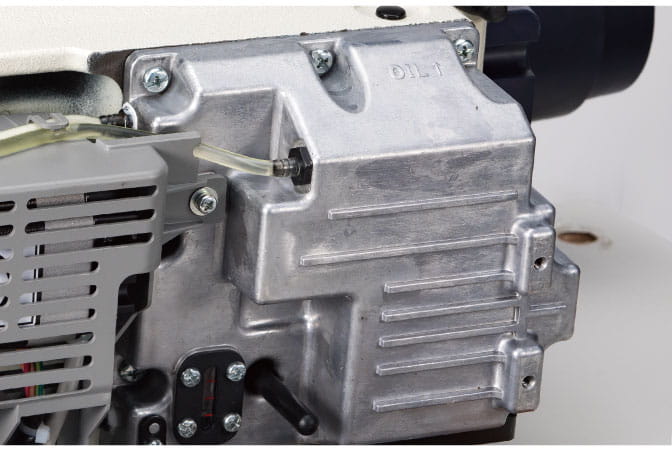
Clean-sewing design
Minimum lubrication, contained beneath the bed
The S-7250A uses a sealed oil-tank design and minimum lubrication to reduce the risk of oil leakage and scattering compared with a conventional open oil-pan system. That makes it a reassuring choice for light colours and higher-value garment fabrics.
It is still an industrial machine that requires the specified oil and maintenance. Minimum lubrication means reduced oil supply—not oil-free operation.
Programme the repetitive parts of the seam
Set beginning and ending reverse stitches for consistent seam locking across repeat operations.
Complete the pedal sequence and the machine trims the needle and bobbin threads at the end of the seam.
Brother's P-spec double-action mechanism cuts beneath the needle hole for thread ends as short as approximately 3mm.
Choose the preferred needle stop position to suit turning, handling and removal of the work.
Set the maximum sewing speed at the panel, then use the treadle for variable control within that limit.
Create up to five straight-stitch feed patterns with as many as eight pitch/direction steps in each pattern.
Combine stitch counts and operating settings for repeat tasks that benefit from a defined sewing sequence.
Copy compatible settings and sewing data between machines or use USB memory for supported software updates.
The platform can connect with Brother's optional production-management environment for process visibility and analysis.
Design stitch does not mean decorative zigzag. The needle still moves in a straight line. The programmed pattern is created by changing forward/reverse direction and stitch pitch through the electronic feed system.
Where DigiFlex Feed changes the working day
| Workflow area | Conventional mechanical-feed plain sewer | Brother S-7250A DigiFlex Feed |
|---|---|---|
| Stitch-length adjustment | Mechanical dial and linkage | Numerical setting from the operation panel |
| Feed motion | Fixed mechanical locus unless physically adjusted | Selectable electronic feed locus for the material and operation |
| Reverse response | Mechanical changeover | Fast stepping-motor changeover coordinated with needle position |
| Repeatability | Relies more heavily on dial position and manual setup | Digital values and programmes can be reproduced more consistently |
| Pitch variation within a pattern | Normally manual | Programmable straight-stitch sequences with pitch and direction steps |
| Setup sharing | Write down settings and reproduce manually | Compatible data and settings can be copied by USB |
| Production data | Separate monitoring required | NEXIO-compatible when the optional management system is added |
Optimised for light-to-medium garment and general sewing
Woven garments
Cotton, linen, shirting, suiting, uniforms and many common apparel materials.
Alterations
Trouser hems, side seams, repairs, zips, linings and everyday tailoring operations.
Sensitive fabrics
Fine or easily marked materials where feed tuning and clean minimum lubrication are valuable.
Light knits
Suitable straight-seam operations using the correct DB × 1 ballpoint/stretch needle and careful testing.
Homewares
Pillowcases, bedding, light curtains, napery and other projects with long straight seams.
Medium garment denim
With the correct needle, thread and controlled speed at bulky seam crossings—test your actual stack.
Sample rooms
Move between fabrics and reproduce stitch settings without repeated mechanical feed adjustment.
Repeat production
Consistent pitch, speed, backtack and trimming when the panel is set for the operation.
Need heavier feed authority? For frequent canvas stacks, upholstery, heavy leather or webbing, ask Direct Sewing about the correct heavy-material, needle-feed or compound-feed machine. Electronic bottom feed improves control but does not turn the S-7250A into a walking-foot machine.
Brother NEXIO S-7250A at a glance
| Current Direct Sewing SKU | S7250A |
|---|---|
| Machine type | Industrial single-needle, bottom-feed, straight lockstitch machine with electronic feeding and thread trimmer |
| Configuration represented | Medium materials; Direct Sewing Premium/Premier specification—confirm current model-plate suffix |
| Feed system | Brother DigiFlex Feed, direct electronic control by stepping motor |
| Drive | Integrated direct-drive AC servo motor |
| Maximum sewing speed | Up to 5,000 stitches/min at stitch lengths of 2.0mm or below |
| Maximum backtack speed | Up to 3,000 stitches/min |
| Maximum stitch length | 5mm for the medium-material configuration |
| Needle system | DB × 1 / 16x231; Brother range #11–18 (Nm 75–110) for medium materials |
| Needle-bar stroke | 31mm for the medium-material configuration |
| Feed-dog height | 0.8mm for the medium-material configuration |
| Presser-foot lift | 6mm by presser-bar hand lever; up to 13mm by knee lifter |
| Thread trimming | Automatic; Premium/P specification uses Brother's double-action short-thread mechanism |
| Automatic functions | Programmable start/end backtacking, thread trimming, needle positioning, stitch-count and sewing programmes |
| Design-stitch memory | Up to five straight-stitch patterns, each with up to eight feed pitch/direction steps |
| Lubrication | Minimum lubrication with sealed oil-tank design |
| USB | Compatible setting/sewing-data transfer and supported software updates; not an embroidery-design port |
| Production connectivity | NEXIO-compatible; applicable Brother production-management system/module sold and configured separately |
| Machine-head weight | Approximately 35kg; table, stand and accessories are additional |
| Power | Brother lists 200–230V configurations below 450VA, among other regional voltages; confirm current NZ-stock connection |
Supplied ready to become a permanent production station
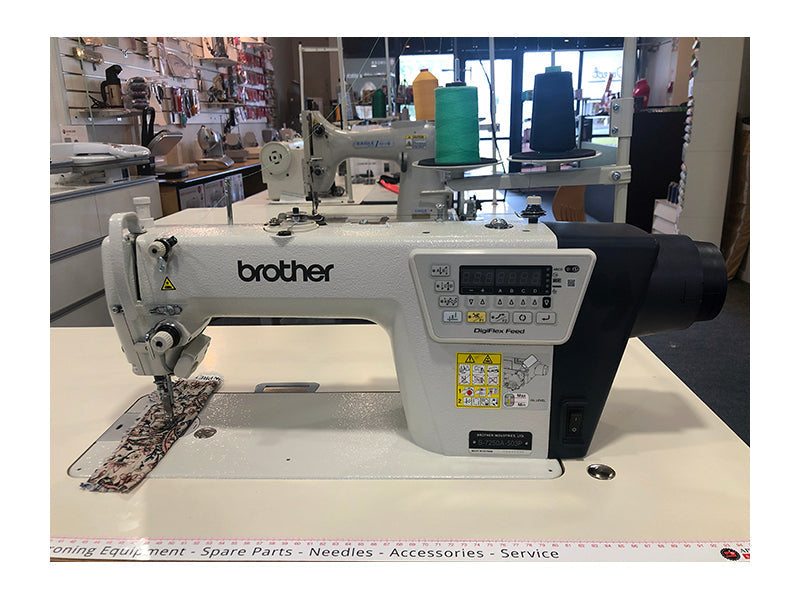
The current product page presents the S-7250A built into an industrial table and stand with its integrated drive, thread stand, mobility wheels and starter accessories. Confirm the exact current contents and delivery format before dispatch.
- Brother NEXIO S-7250A machine head
- DigiFlex electronic feeding system
- Integrated AC servo direct drive
- Built-in operation panel and LED sewing light
- Automatic backtack and thread trimmer
- Short-thread trimming on confirmed P specification
- Numerical stitch-length control
- Selectable feed motion
- Programmable sewing and stitch-count functions
- USB-compatible settings transfer
- Industrial table and stand
- Speed-control treadle
- Knee-lifter arrangement
- Thread stand
- Wheels/castors for easier repositioning
- Confirm current table and assembly finish
- Sewing-machine oil
- Industrial bobbins
- Screwdriver / setup tool
- Industrial needles
- Instruction and parts information
- Confirm current quantities
- DB × 1 / 16x231 needles
- Compatible industrial plain-sewer bobbins
- Specified clear industrial sewing-machine oil
- Coats Astra industrial thread
- Exact model-plate suffix
- Current table, stand and wheel configuration
- NZ voltage, lead and plug arrangement
- Assembled or freight-ready format
- Access, installation and operator-training needs
Brother NEXIO S-7250A
Brother's current product page covers DigiFlex Feed, needle-breakage prevention, sewing quality, lubrication and model variants.
View Brother Product PageS-7250A instruction manual
Official information for installation, threading, panel operation, programming, lubrication, maintenance and troubleshooting.
Open Official ManualDirect Sewing instruction manual
A locally hosted copy of the S-7250A instructions for convenient access from the product listing.
Open Local ManualBrother parts book
Official diagrams and part identification for qualified servicing and accurate replacement-part selection.
Open Parts BookBrother S-7250A video library
Brother's how-to videos cover basic panel settings, advanced programming, DigiFlex Feed, short-thread trim and data reset.
Watch Brother VideosTalk with Direct Sewing
Discuss materials, model-plate specification, workstation setup, demonstration, delivery, training and New Zealand support.
Contact Direct SewingWhat to know before choosing the Brother S-7250A
What exactly is the Brother NEXIO S-7250A?
It is an industrial single-needle straight-lockstitch machine with integrated direct drive, DigiFlex electronic bottom feed, automatic thread trimming and programmable sewing functions.
What does DigiFlex Feed do?
A stepping motor controls the feed dog's timing, motion, direction and stitch length electronically. This allows numerical pitch settings and selectable feed motion to help address puckering, layer slippage, thread tightening and needle stress.
How is electronic feed different from a normal stitch-length dial?
A conventional plain sewer changes pitch through mechanical linkages. The S-7250A sets pitch numerically and coordinates feed movement with the needle through a stepping motor, making settings easier to reproduce and programme.
Is this the medium- or heavy-material version?
The Direct Sewing specification matches Brother's medium-material configuration: up to 5,000 stitches per minute, 5mm maximum stitch length, 31mm needle-bar stroke and DB × 1 needles in #11–18.
What does Premium or Premier specification mean?
Brother's P specification adds the double-action short-thread trimming system. Direct Sewing presents this as the Premium machine and links Premier-specification literature; confirm the P suffix on the current model plate.
How short are the trimmed thread ends?
Brother specifies a minimum remaining thread length of approximately 3mm for the P/Premier mechanism. Actual results depend on correct setup, thread, fabric and operating conditions.
Does short-thread trimming help with bird's nests?
Yes. Brother designed the P specification to minimise start-of-seam thread nesting and reduce the amount of after-cutting required. Correct threading, tension and setup still matter.
Does it only sew straight stitch?
Yes. It makes a two-thread straight lockstitch and reverse lockstitch. It does not zigzag, overlock edges, sew buttonholes or create side-to-side decorative stitches.
What is a design stitch on this machine?
It is a programmed straight-stitch feed sequence made by changing stitch pitch and forward/reverse direction. It is useful for special reinforcement or repeat patterns but is not a zigzag or embroidery design.
How many design stitches can be stored?
The operation system supports up to five design-stitch patterns, each containing up to eight pitch/direction steps.
Who is the S-7250A best suited to?
Alteration businesses, garment makers, sample rooms, production workrooms, fashion training and serious studios that need repeatable straight stitching across varied light-to-medium materials.
What materials can this configuration sew?
It is designed for light-to-medium garment and general sewing materials such as cotton, linen, shirting, suiting, many uniform fabrics, homewares and suitable garment denim.
Will it sew denim?
It can sew medium garment denim within its material range. Use the correct DB × 1 needle and thread, reduce speed at bulky seam intersections and test the actual layer stack. Very heavy hems may need a different configuration or feed system.
Can it sew stretch or knit fabrics?
It can straight-stitch suitable knits with the correct industrial ballpoint/stretch needle, thread, presser pressure and DigiFlex setting. It does not replace an overlocker or differential-feed machine for every knit operation.
Can it sew leather, canvas or upholstery?
Some light garment leather or light canvas may be manageable with correct setup and testing. It is not a compound-feed machine and is not intended for heavy leather goods, upholstery stacks, saddlery or heavy webbing.
How fast is the S-7250A?
Brother specifies up to 5,000 stitches per minute for the medium-material configuration when stitch length is 2.0mm or less. Set a lower speed for precision, learning, delicate fabric or bulky intersections.
Do I have to sew at full speed?
No. Set a lower maximum speed at the operation panel and use the servo treadle for variable control within that limit.
What is the maximum stitch length?
The medium-material version represented by this listing has a 5mm maximum. Brother's separate heavy-material S-7250A specification can reach 7mm and should not be assumed for this machine.
Does it backtack automatically?
Yes. Beginning and ending reverse stitches can be programmed at the panel. Manual reverse remains available when an operation needs individual control.
Why is reverse sewing smoother?
DigiFlex Feed changes direction through a stepping motor and coordinates reverse-feed timing with needle position. This improves response and helps reduce vibration, noise and unnecessary needle stress.
Does it trim thread automatically?
Yes. Automatic thread trimming is standard to the S-7250A. On a confirmed Premium/P unit, Brother's double-action mechanism also leaves shorter remaining thread ends.
Does it have automatic presser-foot lift?
Automatic foot lift is not claimed in the current Direct Sewing package description. The listed machine provides 6mm lift by hand lever and up to 13mm by knee lifter. Ask Direct Sewing if an automatic lifter is required.
How high does the presser foot lift?
Brother specifies 6mm using the presser-bar hand lever and up to 13mm using the knee lifter.
Which needles does it use?
The medium-material configuration uses DB × 1 / 16x231 industrial needles. Brother specifies #11–18 (Nm 75–110); select size and point style to match the fabric and thread.
Can I use domestic sewing-machine needles?
No. Domestic 130/705 H needles use a different shank. Use the specified DB × 1 / 16x231 industrial system.
Does the machine require oil?
Yes. It is a minimum-lubrication machine, not an oil-free machine. Use the lubricant and maintenance procedure specified by Brother and keep the sealed oil-tank system correctly serviced.
How does the sealed oil tank help?
It contains the oil supply more effectively than a conventional open pan and, with minimum lubrication, helps reduce leakage and oil scattering that could mark sewing materials.
Does it have an LED sewing light?
Yes. The Direct Sewing package includes illumination for the needle and sewing area.
What is the USB port used for?
It can copy compatible settings and sewing data between machines and supports specified software updates. It is not an embroidery port and does not make the machine sew decorative image files.
Is NEXIO production management included?
No. The machine is compatible with Brother's NEXIO production-management environment, but the communication equipment, software, network and implementation are separate.
Does it come with a table and stand?
The current Direct Sewing page presents it as a built-up industrial workstation with table, stand, direct-drive system, treadle, thread stand and wheels. Confirm the current finish and delivery format when ordering.
What accessories are included?
The current listing names oil, bobbins, a screwdriver and needles. Confirm the current quantities, tools, manuals and package contents before dispatch.
Is it portable?
No. The head alone weighs approximately 35kg before the table and stand. Plan a permanent workstation and discuss doorways, stairs, freight and assembly with Direct Sewing.
What power supply does it need?
Brother lists 200–230V configurations below 450VA, alongside other regional versions. Confirm the exact current NZ-stock voltage, lead, plug and electrical requirements before installation.
Is this a good first industrial machine?
Yes, when straight stitch is the core of your work and you value room to grow into electronic-feed and programming functions. Begin with a low speed ceiling and arrange a proper demonstration.
Can I test my fabric before buying?
Contact Direct Sewing to confirm demonstration availability. Bring the actual fabric, thread, seam construction and layer count so the team can assess feed motion, needle choice, speed and stitch quality.
What should I confirm before delivery?
Confirm the model-plate suffix, Premium/P short-thread specification, table and stand finish, wheel arrangement, included accessories, electrical connection, assembled dimensions, freight method, installation, training and current support terms.
Bring the seam that gives your current machine trouble.
The S-7250A is most convincing when DigiFlex Feed is tuned to your own fabric. Talk with Direct Sewing about a demonstration, current Premium specification, workstation package, delivery and ongoing New Zealand industrial-machine support.