

SINGER 150 | Adjustable small/medium dress form
Fit the garment before cutting the fabric—or calling the fitting finished.
The red SINGER 150 gives garment makers an adjustable three-dimensional form for checking fit, balance, drape and hems away from the body. Twelve body dials shape the bust, waist and hips, while separate neck, torso-length and height adjustments help establish a more useful working reference for small-to-medium measurements.
- Small/medium measurement range covers bust 84–101cm, waist 64–81cm and hips 86–104cm.
- Twelve body dials provide four adjustment points each at bust, waist and hips.
- Separate neck dial adjusts approximately 34–43cm for collars and necklines.
- Eight foam-backed fabric panels let you pin patterns, muslins and garments to the surface.
- Tool-free height adjustment helps set a practical working and hemming height.
- 360° hem guide supports consistent pinning and marking around skirts and dresses.
- Stable four-leg pedestal creates a freestanding sewing-room workstation.
 Model 150 | Small/Medium
12 dialsbust, waist and hip adjustment
8 panelsfoam-backed pinning surface
360°adjustable hemming guide
No toolsbasic assembly and height setup
Is SINGER 150 the right starting size?
Compare your body—or the intended garment wearer—with all four published ranges. For the best result, the bust, waist and hip measurements should each sit inside the form's minimum and maximum; do not choose from a clothing-size label alone.
Helpful fitting rule: choose a form that adjusts to your key circumferences, then use thin padding and a close-fitting cover to refine curves, asymmetry or contours the dials cannot reproduce exactly. Published dimensions are approximate.
Make pattern and fitting decisions without repeatedly trying it on
A dress form holds the garment at working height while you stand back, pin, mark and compare. It is particularly helpful when the maker and wearer are the same person, or when a project needs time between fittings.
Check balance and ease
Assess how a bodice, dress, jacket or toile sits through the bust, waist, hips and shoulder area.
See fabric in three dimensions
Experiment with pleats, gathers, necklines, collars and design lines while gravity acts on the fabric.
Mark an even finish
Use the height-adjustable hem gauge to pin or mark a consistent line around skirts and dresses.
Progressive adjustment for a smoother shape
Four bust dialsDistribute adjustment around the front, sides and back of the upper torso. Four waist dialsSet the waist circumference while maintaining a balanced centre position. Four hip dialsShape the lower torso across the front, sides and back. Separate neck controlPress and turn the neck dial, then confirm the result with a flexible tape measure.
Twelve body dials let you build the measurement gradually
There are four body dials at the bust, four at the waist and four at the hips. When changing more than a small amount, turn each dial a little in sequence, then repeat the circuit. This shares the tension across the form and creates a more even transition between the body panels.
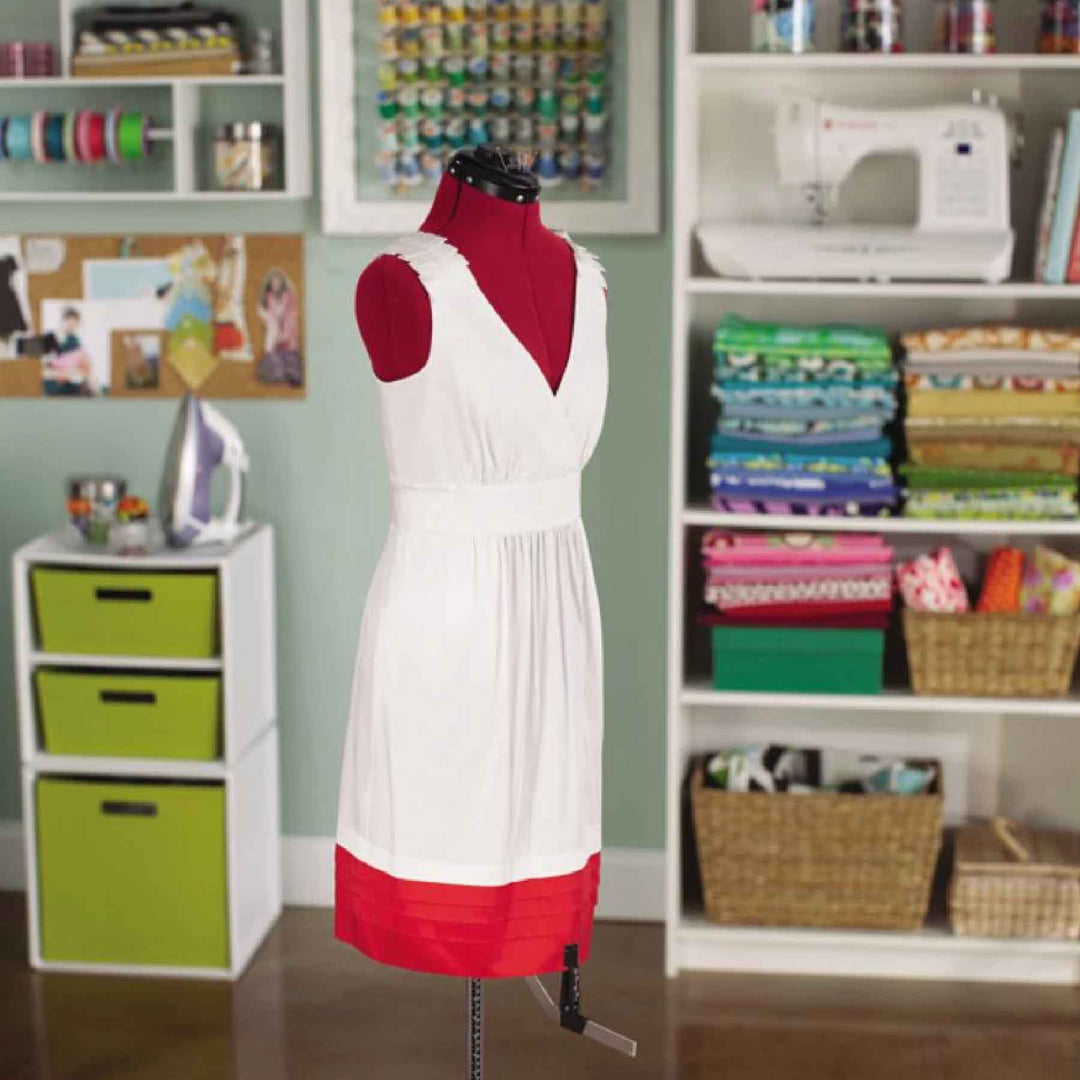
Official lifestyle image + instruction manual
From flat fabric to a garment you can assess at a glance
The SINGER 150 holds dresses, tops, jackets, patterns and toiles upright so you can examine proportion, drape and construction as a complete garment rather than a flat piece on the table.
The SINGER 150/151 instruction manual explains stand assembly, body-dial order, neck adjustment, waist-length adjustment and correct use of the hem gauge.
Open SINGER 150/151 Manual (PDF)The PDF opens in a new browser tab.Fine-tune the form for necklines, torso length and working height
Adjust the neck circumference before setting collars, facings and neckline shapes, then check it with a flexible tape.
The centre mechanism lets you extend and lock the torso length when the body proportions need more space between bust and waist.
Raise or lower the form on its telescopic stand without tools to suit the wearer, project and working position.
Separate adjustable sections create the changing bust, waist and hip circumferences across the red form.
Pin fabric, tissue patterns, muslins and garment layers to the covered panels during fitting and construction.
Four detachable legs form a broad freestanding base for fitting, pinning, display and hemming.
Set the hem height once, then work around the garment
Choose the finished length
Slide the hem-gauge assembly along the marked centre pole and lock it at the required height before working around the garment.
Keep the reference consistent
The gauge arm brings the same height to different points around a skirt or dress, helping you pin, chalk or baste a more consistent hemline.
Useful from early pattern work to final presentation
Pattern adjustment
Pin tissue or a toile in place and refine shape before cutting the final fabric.
Draping + design
Develop pleats, gathers, collars and creative lines directly in three dimensions.
Fitting + alterations
Check balance, ease, seam placement and proportion while the garment hangs naturally.
Linings + construction
Align layers, inspect openings and keep work accessible between sewing stages.
Hemming + display
Mark garment length, photograph finished work or present a piece in the sewing room.
Set up the SINGER 150 in six stages
Assemble the stand
Fit all four legs, insert the telescopic pole and seat the torso securely; no tools are required.
Set the height
Adjust and lock the body height for the wearer, project and comfortable working position.
Dial the body
Work around bust, waist and hips in small, even increments rather than turning one dial fully.
Adjust neck + torso
Set the neck circumference and waist length, checking against a flexible tape measure.
Refine with padding
Add light padding and a close-fitting cover where individual contour needs more shaping.
Set the hem gauge
Choose the finished height, lock the gauge and work consistently around the garment.
What the numbers mean before you order
| Area | SINGER 150 range | How to use it |
|---|---|---|
| Bust | 84–101cm / 33–40in | Measure around the fullest part, keeping the tape level and comfortably close. |
| Waist | 64–81cm / 25–32in | Measure the natural waist without pulling the tape tight. |
| Hips | 86–104cm / 34–41in | Measure the fullest hip/seat area with the tape parallel to the floor. |
| Neck | 34–43cm / 13⅜–17in | Measure where a close collar would sit, allowing the comfort required by the project. |
| Height | Tool-free adjustable | Changes the working and hemming height; no exact overall range is published for this NZ listing. |
| Torso length | Locking adjustment | Adds length through the body when the waist position needs to sit lower. |
The quick reference
| Brand | SINGER |
|---|---|
| Model | 150 / SM150 |
| Product type | Adjustable dress form / dressmaking mannequin |
| Size category | Small/Medium |
| Colour | Red |
| Bust range | 84–101cm / 33–40in |
| Waist range | 64–81cm / 25–32in |
| Hip range | 86–104cm / 34–41in |
| Neck range | 34–43cm / 13⅜–17in |
| Body adjustment | 12 dials: four each at bust, waist and hips |
| Neck adjustment | Separate press-and-turn neck dial |
| Body construction | Eight foam-backed fabric-covered panels suitable for pinning |
| Torso length | Locking waist / torso adjustment |
| Body height | Tool-free locking height adjustment |
| Hemming system | Adjustable hem measure, gauge arm and 360° marking guide |
| Stand | High-stability pedestal with four detachable legs |
| Assembly | Basic tool-free assembly required |
| Measurements | Published ranges are approximate |
The complete adjustable fitting and hemming setup
Red eight-panel SINGER 150 body with twelve body dials and separate neck control.
Supports tool-free body-height adjustment and the marked hem-measure system.
Adjustable collar, arm and gauge for pinning, marking or basting garment length.
Detachable high-stability floor stand; basic assembly requires no tools.
SINGER 150, SINGER 151 or the full mannequin range?
SINGER 150 Small/Medium – Red
Choose this model when bust 84–101cm, waist 64–81cm and hips 86–104cm contain the intended measurements.
Check Model 150 Measurements →SINGER 151 Medium/Large – Grey
Consider model 151 for the larger published ranges: bust 101–116cm, waist 78–93cm and hips 101–117cm.
View SINGER 151 →Adjustable Mannequins
Compare available sizes, brands and form styles when the intended measurements fall outside either SINGER range.
Browse All Dress Forms →SINGER 150 FAQs
Is this SINGER model 150 or SM150?
It is SINGER model 150, also referenced by Direct Sewing as SM150. This is the red Small/Medium adjustable dress form.
What measurements does SINGER 150 cover?
The published ranges are bust 84–101cm, waist 64–81cm, hips 86–104cm and neck 34–43cm. All published measurements are approximate.
Should I choose the form by my normal clothing size?
No. Clothing sizes vary between patterns and brands. Measure the bust, waist and hips and confirm that all three sit inside the form's adjustment ranges.
How many adjustment dials are there?
There are twelve body dials: four at the bust, four at the waist and four at the hips. The neck has its own separate adjustment dial.
How should I expand the form by several sizes?
Turn each body dial only a small amount, work around the entire bust/waist/hip group, then repeat. Progressive adjustment distributes tension and keeps the panels more balanced.
Can I pin directly into the form?
Yes. The eight fabric-covered body panels have foam backing for pinning patterns, fabric and garments. Pin into the covered areas and avoid the plastic gaps and dials.
Can it reproduce my exact body shape?
The dials establish the key circumferences and the torso length can be adjusted. For individual curves, asymmetry or contours, add light padding and a close-fitting cover after setting the form slightly below the final measurements.
Does the dress form adjust in height?
Yes. The body height adjusts and locks on the telescopic stand without tools. An exact overall height range is not published on the current NZ listing.
What does the hem guide do?
Set the gauge at the intended finished height, then use its arm to pin, mark or baste a consistent hemline around a skirt or dress.
Does it require assembly?
Yes, basic assembly is required, but no tools are needed. Fit the four legs into the base, insert the telescopic pole and seat the torso securely.
Is it suitable for display as well as sewing?
Yes. The red form can hold completed garments for photography, studio presentation or sewing-room display as well as pattern work, fitting and construction.
What is the difference between SINGER 150 and 151?
SINGER 150 is the red Small/Medium model. SINGER 151 is the grey Medium/Large model with larger bust, waist and hip ranges. Choose by the actual measurements you need to reproduce.
Measure. Dial. Pin. Step back and see the garment.
Give fitting, draping and hemming a three-dimensional workspace.
Set the red SINGER 150 to the intended small-to-medium measurements and keep garment decisions visible between every sewing stage.