The cotton-dominant core helps finished garments feel lighter and less heavily insulated than a pure-wool knit.
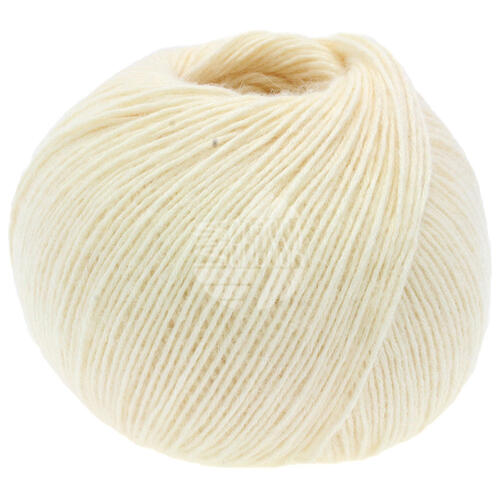
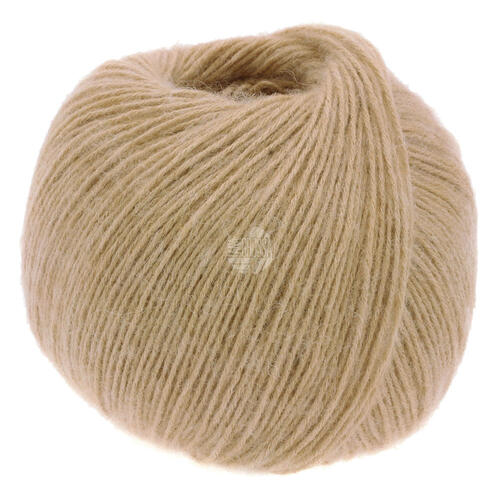
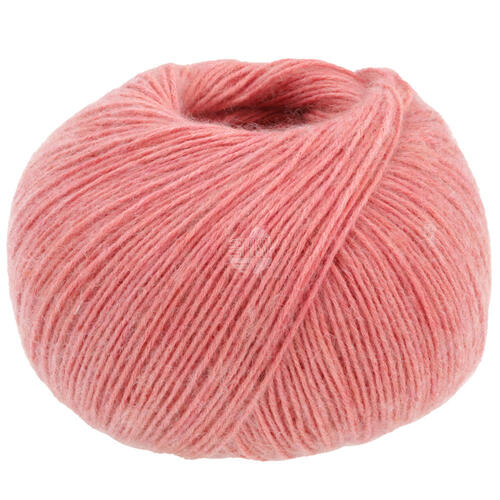
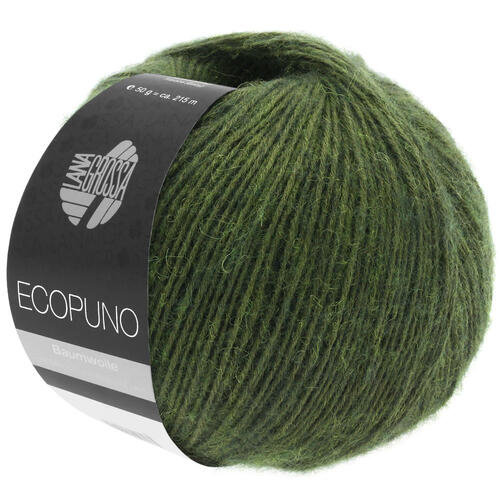
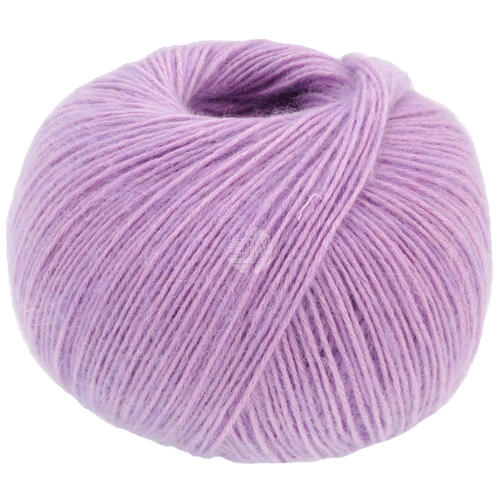
Light DK / 8 ply gauge · three natural fibres
Lana Grossa Ecopuno: light enough to layer, soft enough to live in
An airy cotton, merino and baby-alpaca yarn that creates beautifully light fabric with gentle warmth and a soft halo. With an exceptional 215 metres in every 50g ball, Ecopuno is made for season-spanning garments that do not feel heavy.
- 72% cotton brings breathability and a smooth, comfortable base.
- 17% merino wool adds warmth, softness and useful resilience.
- 11% baby alpaca contributes a delicate halo and luxurious hand.
- 215m per 50g creates generous fabric with remarkably little weight.
 50g · 215m · 4–4.5mm
72% CottonBreathable foundation
17% MerinoSoft warmth and recovery
11% Baby AlpacaGentle halo and luxury
215m / 50gExceptionally lightweight yardage
Each fibre solves a different part of the comfort equation
Ecopuno does not feel like a standard cotton yarn, a traditional wool DK or a fuzzy alpaca yarn. Its blend brings those fibres together in a lighter, more versatile fabric.
Merino contributes gentle warmth and elasticity, helping the fabric feel less rigid than many cotton-dominant yarns.
A small proportion of baby alpaca adds plushness, subtle bloom and an inviting surface without overwhelming the blend.
The Ecopuno difference
DK-style gauge without conventional DK weight
Ecopuno's airy, net-like construction carries fine fibres with plenty of loft. That is why a 50g ball contains approximately 215 metres yet Lana Grossa recommends 4–4.5mm needles and a 24-stitch gauge.
- Finished garments feel light rather than dense
- Excellent metreage for colourwork and larger pieces
- Soft bloom fills the fabric after gentle washing
- Ideal for indoor layers and changing seasons
A natural choice for comfortable, wearable layers
Pullovers
Lightweight sweaters with enough warmth for layering and less bulk than a dense wool DK fabric.
Cardigans
Soft everyday layers with attractive drape, subtle halo and a broad neutral-to-colour palette.
Tops & vests
Cotton-rich fabric makes Ecopuno especially appealing for sleeveless pieces and transitional-weather tops.
Shawls & wraps
Generous metreage creates large, enveloping pieces without making them unnecessarily heavy.
Scarves & cowls
Soft against the neck, gently warm and available in colours that coordinate easily with everyday wardrobes.
Baby garments
Light, soft pieces when the pattern matches the gauge and hand-wash care suits the recipient.
Texture & cables
The softly blooming surface gives cables and texture a rounded, relaxed appearance.
Colourwork
Fifteen coordinated shades and 215m per ball make stripes, slip-stitch patterns and modern colour blocking inviting.
For pattern matching: use Lana Grossa's gauge of 24 stitches and 30 rows per 10cm as your starting point. Ecopuno's metreage looks finer than a typical DK, so do not substitute by metres-per-ball alone.
Fifteen wearable colours, ready to combine
Build a timeless neutral garment, choose a single saturated shade, or combine complementary colours for stripes and colourwork. The numbered colour code is the most reliable reference when selecting your variant.
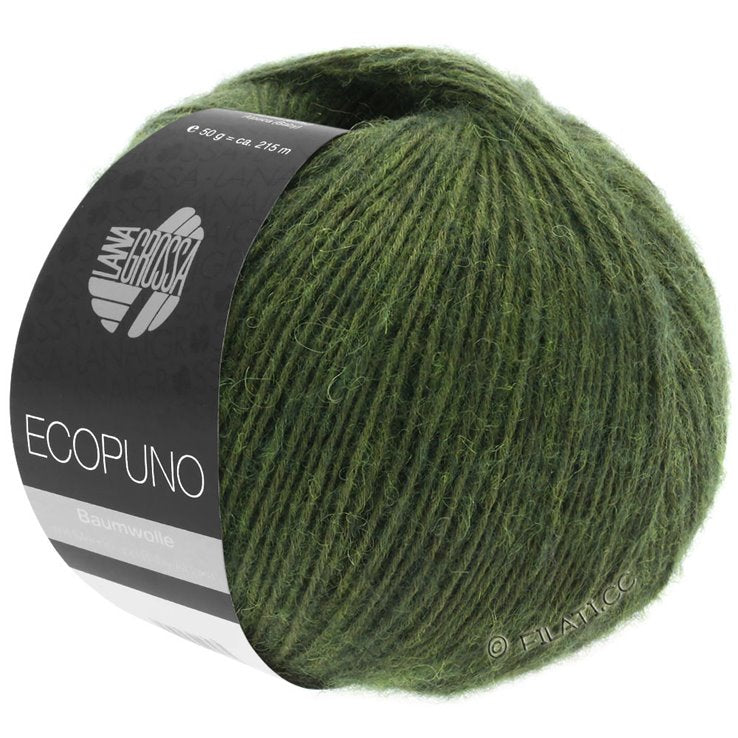
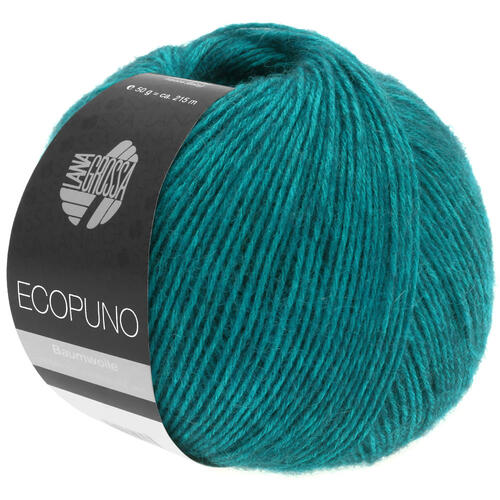
01 LodenDeep natural green
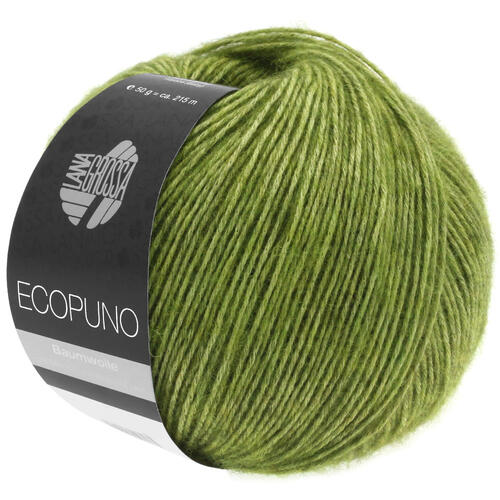
02 AppleFresh apple green
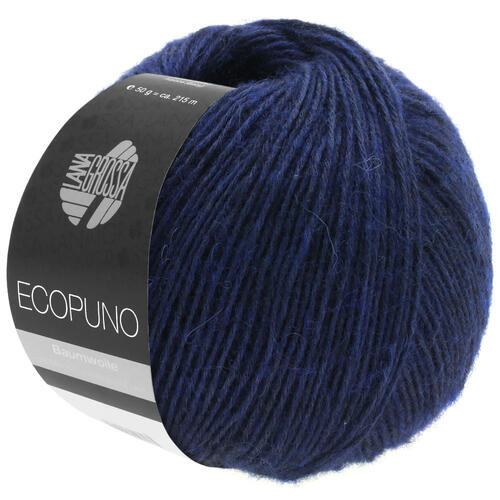
10 MarineClassic deep navy
12 PetrolDeep blue-green
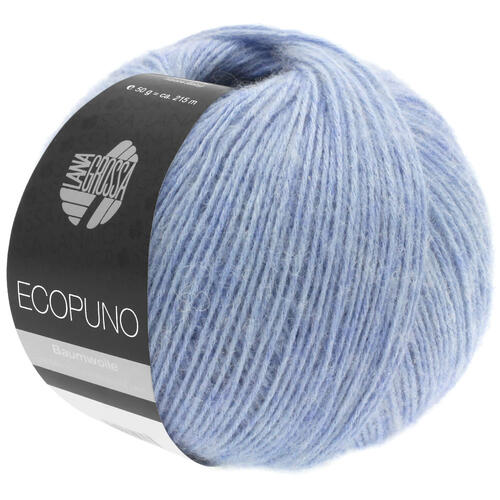
13 Light BlueSoft, airy blue
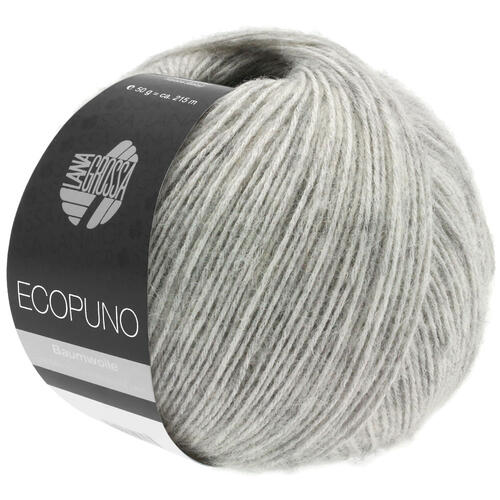
14 Light GreyVersatile pale grey
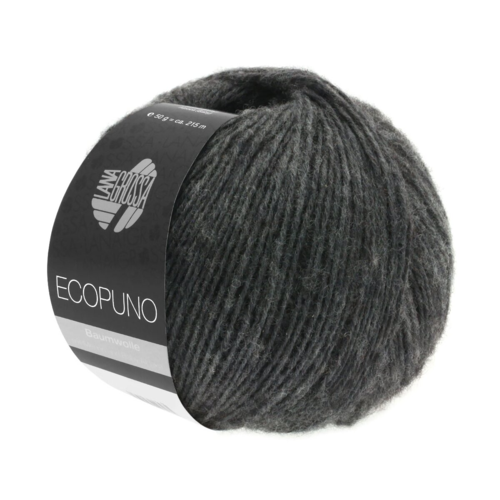
15 Dark GreyModern charcoal grey
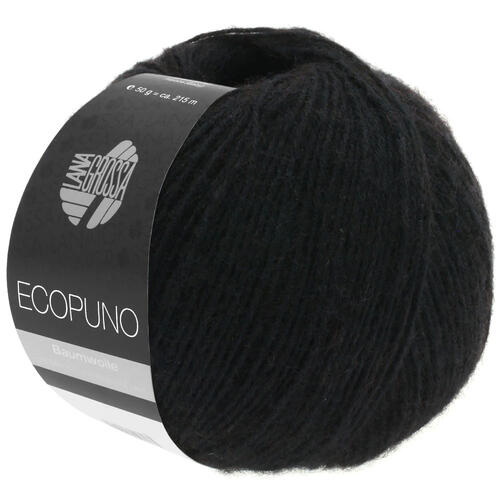
16 BlackDeep wardrobe black
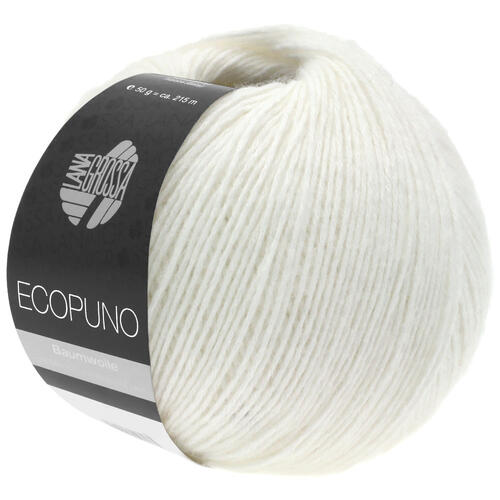
26 WhiteClean, light white
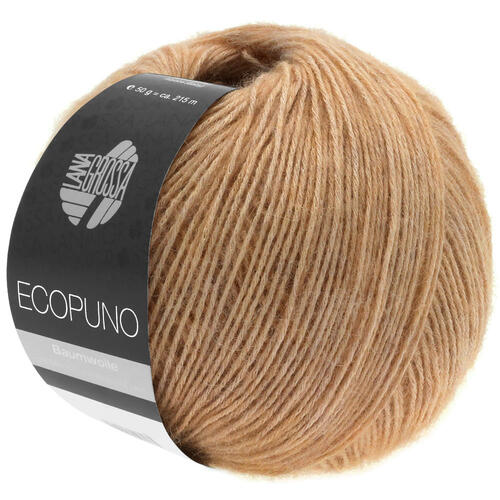
32 CamelWarm camel neutral
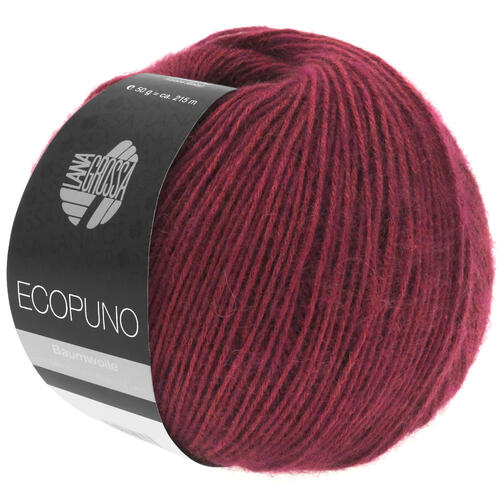
35 BordeauxRich wine red
46 EcruSoft natural cream
55 BeigeLight, balanced beige
91 Salmon PinkWarm, flattering pink
92 LilacGentle pastel lilac
Colour planning: order the full project quantity together and keep the ball bands. Solid-colour yarn can still show small production-batch differences, particularly across a large garment.
Three easy ways to build a successful palette
Quiet tonal layers
Combine Ecru, Beige, Camel and one grey for soft, sophisticated stripes or colour blocks that stay easy to wear.
Nature-led colour
Pair Loden or Apple with Petrol and a pale neutral for a grounded palette with enough contrast to show the pattern.
One clear accent
Use Bordeaux, Salmon Pink or Lilac against White, Ecru or grey so the feature colour feels intentional rather than busy.
How many 50g balls might you need?
These are starting estimates. Always use the pattern's metreage for your size and allow for swatching, extra length, sleeves, cables and pattern matching.
| Project | Typical starting estimate | Plan extra when… |
|---|---|---|
| Hat, mitts or small cowl | 1–2 balls | The fabric is doubled, highly textured or part of a matching set |
| Baby garment | 2–4 balls | The size, sleeves, hood or length increases |
| Scarf or small shawl | 2–4 balls | You want a wide, long or deeply textured piece |
| Top or vest | 4–6 balls | The size is larger, fit is loose or the design has substantial texture |
| Adult pullover | 6–9+ balls | The size, body length, sleeves, cables or colourwork require more |
| Long cardigan or wrap | 8–12+ balls | The design is oversized, long, hooded or heavily textured |
Manufacturer reference: Lana Grossa gives approximately 300–350g—six to seven balls—as a general starting quantity for a women's pullover in size 38–40. Your specific pattern remains the authority.
Why Ecopuno can look finer than “DK / 8 ply” on paper
| Comparison point | Lana Grossa Ecopuno | Typical dense DK / 8 ply |
|---|---|---|
| Ball length | Approximately 215m per 50g | Often substantially fewer metres per 50g |
| Construction | Airy, net-like structure with soft fibre bloom | Often several solid plies twisted together |
| Recommended needles | 4–4.5mm | Frequently around 4mm, depending on yarn and pattern |
| Official gauge | 24 stitches and 30 rows per 10cm | Varies; often around 21–24 stitches per 10cm |
| Finished feel | Light, soft, gently warm and subtly haloed | Usually denser and more substantial at the same garment size |
| Best substitution method | Match the washed gauge and fabric—not only the weight label | Compare gauge, fibre, construction and metreage together |
Season-spanning comfort
Breathable cotton with just enough animal-fibre warmth
The cotton-dominant blend makes Ecopuno appealing when pure wool would feel too heavy, while merino and baby alpaca soften the hand and add gentle insulation.
It is particularly effective for indoor garments, transitional seasons, cool evenings and layered wardrobes. Climate, stitch density and personal temperature preference will determine when it feels most comfortable.
Still contains animal fibre: Ecopuno is not vegan and may not suit someone sensitive to wool or alpaca. Test the yarn against the intended wearer's skin before committing to a large next-to-skin garment.
Lana Grossa Ecopuno at a glance
| Brand | Lana Grossa |
|---|---|
| Yarn range | Ecopuno |
| Direct Sewing weight category | DK / NZ 8 ply; airy light-DK gauge |
| Fibre content | 72% cotton, 17% virgin wool (merino), 11% baby alpaca |
| Ball weight | 50g |
| Length | Approximately 215m |
| Recommended needles | 4–4.5mm, or the size required to achieve pattern gauge |
| Official gauge | 24 stitches x 30 rows per 10cm |
| Construction | Light, airy net-like yarn structure |
| Surface | Soft with a subtle alpaca bloom |
| Best for | Pullovers, cardigans, tops, vests, shawls, scarves, colourwork and lightweight accessories |
| Care | Hand wash; do not tumble dry; dry flat; do not bleach; do not iron |
| Manufacturer garment guide | Approximately 300–350g for a women's pullover in size 38–40; follow the chosen pattern |
Support the garment, protect the halo and dry it flat
Use cool water and a small amount of mild wool-friendly detergent. Avoid soaking unnecessarily.
Support the wet garment, press water out gently and roll it in a clean towel.
Reshape to measurements on a flat surface. Do not hang the wet garment or tumble dry.
Lana Grossa's care symbols advise against ironing, bleaching and tumble drying.
Swatch and wash first: cotton, merino and alpaca respond differently to moisture. A washed swatch shows the final gauge, drape and bloom more reliably than the yarn straight from the ball.
Needles, patterns and more yarn inspiration
Knitting needles
Shop fixed, circular, straight and interchangeable needles, including the 4–4.5mm sizes recommended for Ecopuno.
Browse Knitting NeedlesKnitting patterns
Choose a DK / light-DK pattern that can match 24 stitches per 10cm, then calculate from required metreage.
Browse Knitting PatternsAll knitting yarn
Compare Ecopuno's light cotton blend with wool, alpaca, merino, sock and other DK yarn options.
Browse Knitting YarnLana Grossa Ecopuno questions answered
What is Lana Grossa Ecopuno made from?
It contains 72% cotton, 17% virgin merino wool and 11% baby alpaca.
How much yarn is in one ball?
Each 50g ball contains approximately 215 metres.
Is Ecopuno DK or 8 ply?
Direct Sewing categorises it as DK / NZ 8 ply because it is designed for 4–4.5mm needles and a 24-stitch gauge. Its airy construction gives it much more metreage than a conventional dense DK.
Why do some websites call Ecopuno sport weight?
International weight systems differ, and the 215m-per-50g figure looks fine on paper. Match Lana Grossa's 24-stitch gauge and your pattern fabric rather than relying on the name alone.
What needle size should I use?
Lana Grossa recommends 4–4.5mm. Change size as needed to achieve the gauge and fabric specified by your pattern.
What is the official gauge?
The official gauge is 24 stitches and 30 rows per 10cm.
What does the yarn feel like?
It is light and soft with a gentle alpaca bloom. The cotton base keeps it from feeling like a dense, heavily woollen DK yarn.
Is Ecopuno warm?
It provides gentle warmth from merino and alpaca while the cotton-dominant blend remains more breathable than many pure-wool yarns.
Is Ecopuno suitable for summer?
It can suit mild summer evenings, lightweight tops and transitional garments, but it still contains wool and alpaca. Comfort depends on climate, stitch density and the wearer.
Is Ecopuno suitable for winter?
Yes for indoor layers, scarves and lightweight garments. For severe outdoor cold, a denser high-wool or possum blend may provide more insulation.
Is Ecopuno soft enough for next-to-skin garments?
Many makers choose it for its softness, but sensitivity to merino and alpaca varies. Test a ball against the intended wearer's neck or wrist first.
Is Ecopuno suitable for baby garments?
It can be used for soft lightweight baby garments when the pattern matches the gauge and hand-wash care is practical for the recipient.
Can I knit a sweater with Ecopuno?
Yes. Pullovers, cardigans, tops and vests are among its strongest uses because the finished fabric is light and comfortable.
How much do I need for an adult sweater?
Lana Grossa gives approximately 300–350g, or six to seven balls, as a general guide for a women's pullover in size 38–40. Follow your pattern's size-specific metreage.
Is one ball enough for a project?
One ball may suit a small accessory, swatch project or colourwork accent. Most hats, cowls and mitts need one or two depending on size and design.
Is Ecopuno good for shawls?
Yes. Its generous metreage and light fabric are well suited to shawls and wraps that need size without excessive weight.
Does Ecopuno show cables and texture?
Yes, with a soft and rounded effect. The slight halo can make very intricate texture look gentler than it would in a smooth, tightly plied merino.
Can I use Ecopuno for colourwork?
Yes. The coordinated palette and generous metreage suit stripes, slip stitches and colour blocking. Swatch stranded colourwork to check clarity and fabric density.
Can I crochet with Ecopuno?
Yes. Choose the hook size needed for the pattern and desired drape; a larger hook may suit flowing garments and shawls.
Is Ecopuno suitable for socks?
It is not designed as a reinforced sock yarn. The airy cotton, merino and alpaca construction is better suited to garments and accessories than hard-wearing heels and toes.
Is Ecopuno machine washable?
No machine-wash claim is made here. The published care symbols specify hand washing. Always follow the current ball band.
Can I tumble dry or iron it?
No. Lana Grossa's care symbols advise against tumble drying and ironing. Reshape and dry the item flat.
Why should I dry it flat?
Cotton and alpaca can gain weight when wet. Supporting the garment flat helps protect its shape while it dries.
Should I wash a swatch?
Yes. A washed and dried swatch shows the final gauge, drape and bloom and is essential before sizing a garment.
Can Ecopuno stretch after washing?
The blend can relax when wet, especially in an open gauge. A washed swatch and flat drying help you plan for the final fabric.
Does Ecopuno contain animal fibre?
Yes. It contains 17% merino wool and 11% baby alpaca, so it is not vegan.
Does “Eco” mean Ecopuno is organic or recycled?
Do not assume so from the product name. This listing makes no organic, recycled or environmental-certification claim; it states the verified fibre composition only.
Can I substitute Ecopuno for another DK yarn?
Sometimes, if you can match the washed gauge and desired fabric. Compare construction and fibre as well as yarn weight, because Ecopuno is unusually light for its knitting gauge.
Can I substitute by metreage alone?
No. Its 215m per 50g is much longer than many DK yarns, but its airy structure is designed for DK-style needles. Match gauge and fabric first.
Can I hold two strands together?
Yes, but two strands create a substantially heavier fabric. Swatch to determine the new gauge and check that the resulting density and drape suit the pattern.
Will Ecopuno pill?
Any soft, haloed yarn can show surface wear. A suitable gauge, gentle use, hand washing and avoiding high-friction projects help preserve the fabric.
Should I buy all the yarn for my garment at once?
Yes. Buy the full quantity together where possible and keep the labels, as production batches can show small colour differences.
Which Ecopuno colours does Direct Sewing list?
Loden, Apple, Marine, Petrol, Light Blue, Light Grey, Dark Grey, Black, White, Camel, Bordeaux, Ecru, Beige, Salmon Pink and Lilac.
Where can I find suitable needles and patterns?
Direct Sewing carries knitting needles and DK / 8 ply patterns. Choose a pattern that can match approximately 24 stitches per 10cm and calculate from its required metreage.
Choose the colour for a layer you will reach for across the seasons
Ecopuno balances breathable cotton, merino warmth and baby-alpaca softness in an exceptionally light yarn—ideal when comfort matters just as much as the finished look.