
Four-thread overlock
Two needles and two loopers form a strong, flexible seam for T-shirts, activewear, knit garments and general construction.
Create strong stretch seams, clean raw-edge finishes, rolled hems and decorative effects with an affordable Brother overlocker designed for everyday garment sewing. The Brother 2504D combines lay-in colour-coded threading, F.A.S.T. lower-looper access, differential feed, free-arm sewing and speeds up to 1,300 stitches per minute.
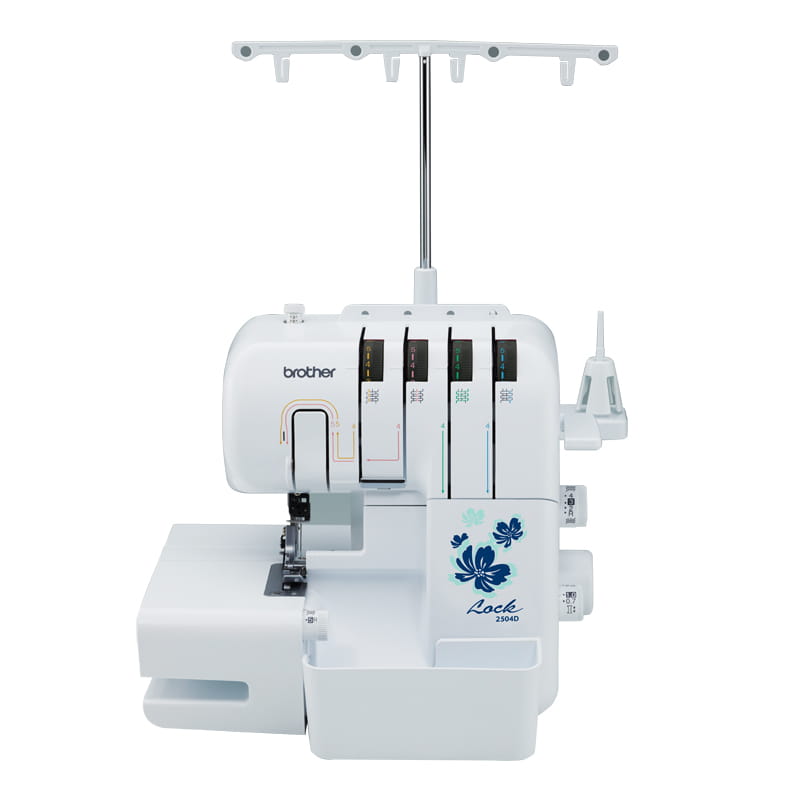
The Brother 2504D is designed for sewists who want to improve the finish of handmade garments without the cost or complexity of a premium air-threading overlocker.
It trims the fabric edge, forms the seam and wraps thread around the raw edge in one fast operation.
Four-thread overlocking creates strong flexible seams for knit garments, while three-thread settings provide neat finishing for woven and stretch fabrics.
Brother’s F.A.S.T. lower-looper system and clear colour-coded guides make the threading route more approachable for new overlocker users.
The Brother 2504D is designed for overlocked seams, raw-edge finishing, trimming, rolled hems and selected decorative techniques.
It does not replace an ordinary sewing machine for straight stitching, zips, buttonholes, top stitching or detailed construction.
It is also not a coverstitch machine and does not create the twin parallel hem normally seen along the bottom of a T-shirt.
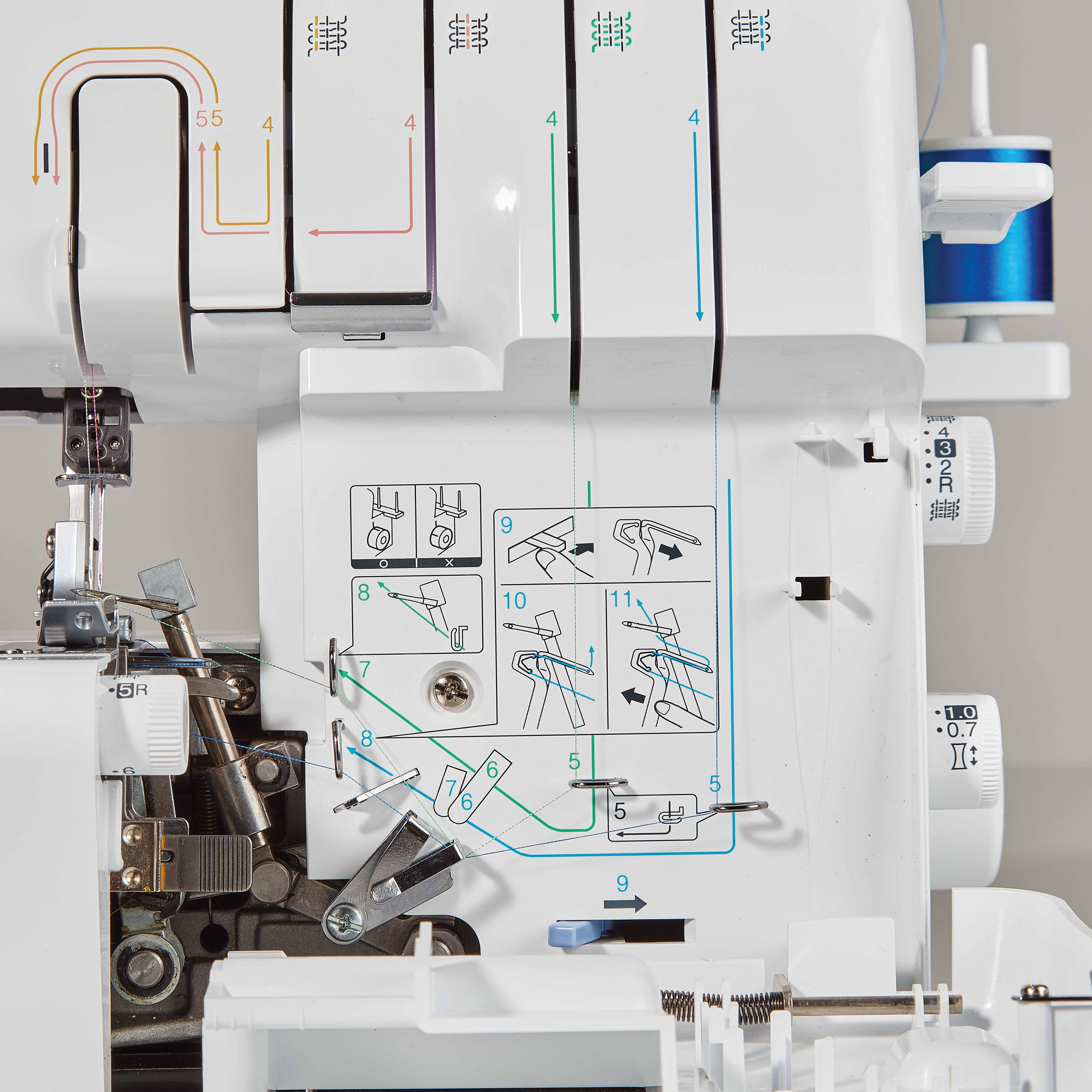
The 2504D uses conventional threading rather than air threading, but Brother has designed the route to be clear and accessible.
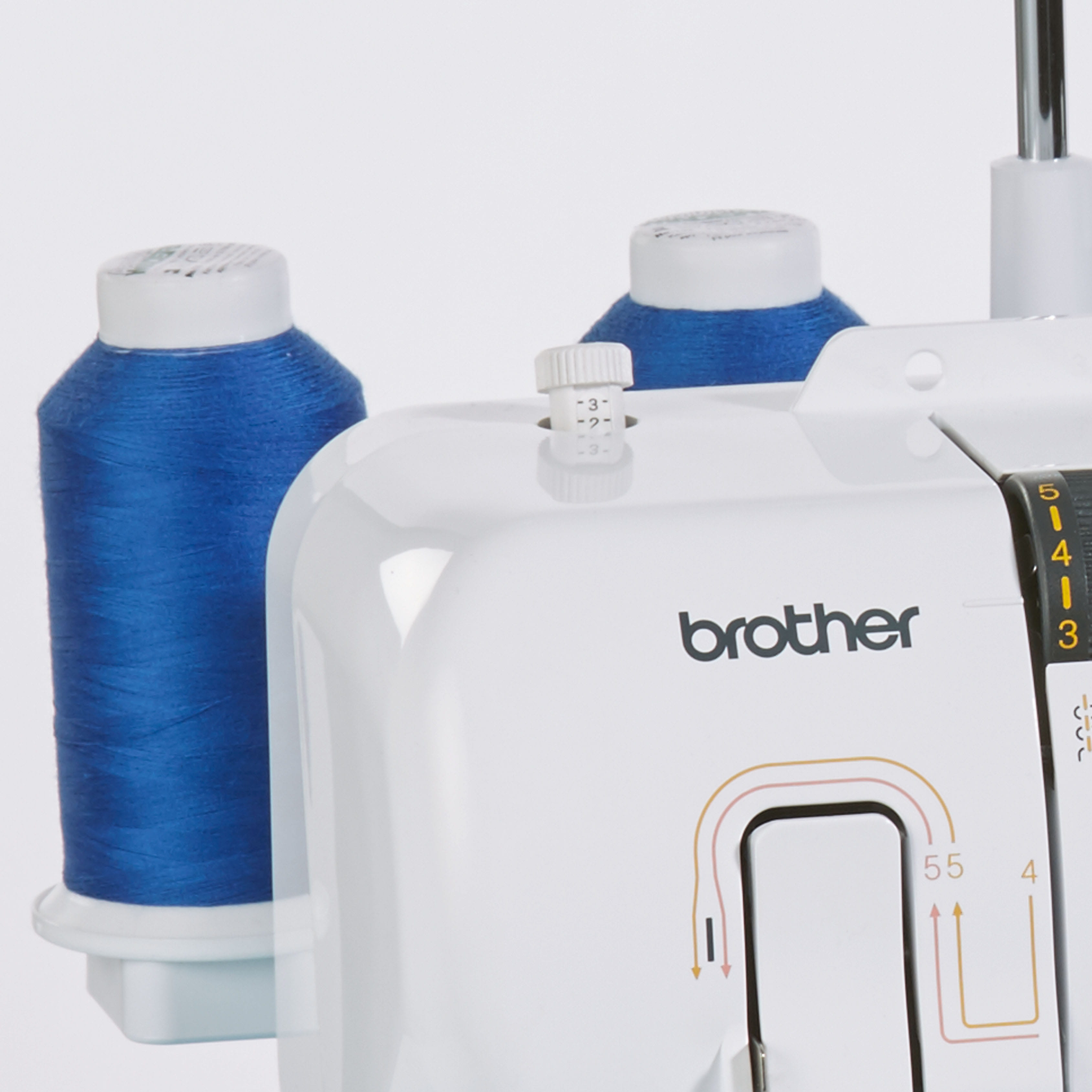
Each thread path is marked in a separate colour and the upper tension guides use a simple lay-in design.
Slide the blue F.A.S.T. lever and the lower looper moves into an easier threading position.
Two needles and two loopers form a strong, flexible seam for T-shirts, activewear, knit garments and general construction.
Use the left needle for a wider raw-edge finish on medium and heavier materials.
Use the right needle for a narrower edge finish on lightweight or medium fabrics.
Create a compact decorative edge for scarves, napkins, ruffles and lightweight garments.
Adjust thread tensions to create a flatter decorative join or edge finish on suitable fabrics.
Move the lower looper into an accessible position for easier conventional threading.
Follow four clearly marked thread routes through the tension guides and machine.
Adjust fabric movement to reduce stretching, rippling or puckering.
Trim, seam and finish fabric substantially faster than ordinary overcasting.
Remove the flatbed section for cuffs, sleeves and smaller circular areas.
Match presser-foot pressure to fine, stretchy, stable or heavier materials.
Convert the stitch finger for fine rolled edges without replacing the needle plate.
Add blind hemming and selected flatlock techniques without buying the foot separately.
The Brother 2504D uses front and rear feed dogs to move the fabric beneath the presser foot.
Differential feed changes the relationship between those feed dogs, helping the machine adapt to stretchy, fine or unstable materials.
Increase the setting to help stop knit seams from stretching and waving. Reduce it for selected fine fabrics or intentional stretching effects.
Adjust how the front and rear feed dogs move the fabric for stable, stretchy or decorative results.
Fast trimming, seaming and edge finishing for garments and repeated projects.
At speeds up to 1,300 stitches per minute, the Brother 2504D can finish seams much faster than an ordinary sewing-machine overcasting stitch.
Speed is controlled using the supplied foot controller, allowing slower operation around curves and seam intersections.
Stitch length controls how closely each overlock stitch is placed along the seam.
Overlock width controls how much fabric remains inside the finished edge after trimming.
Correct adjustment allows the looper threads to wrap neatly around the fabric without loose loops or excessive curling.
Choose a shorter stitch for dense finishing or a longer stitch for bulkier fabric.
Adjust the finished overlock width to suit fabric weight and stitch configuration.
Match the cutting width to the amount of thread wrapping around the raw edge.
Combine suitable length, width and tension settings for fine decorative edges.
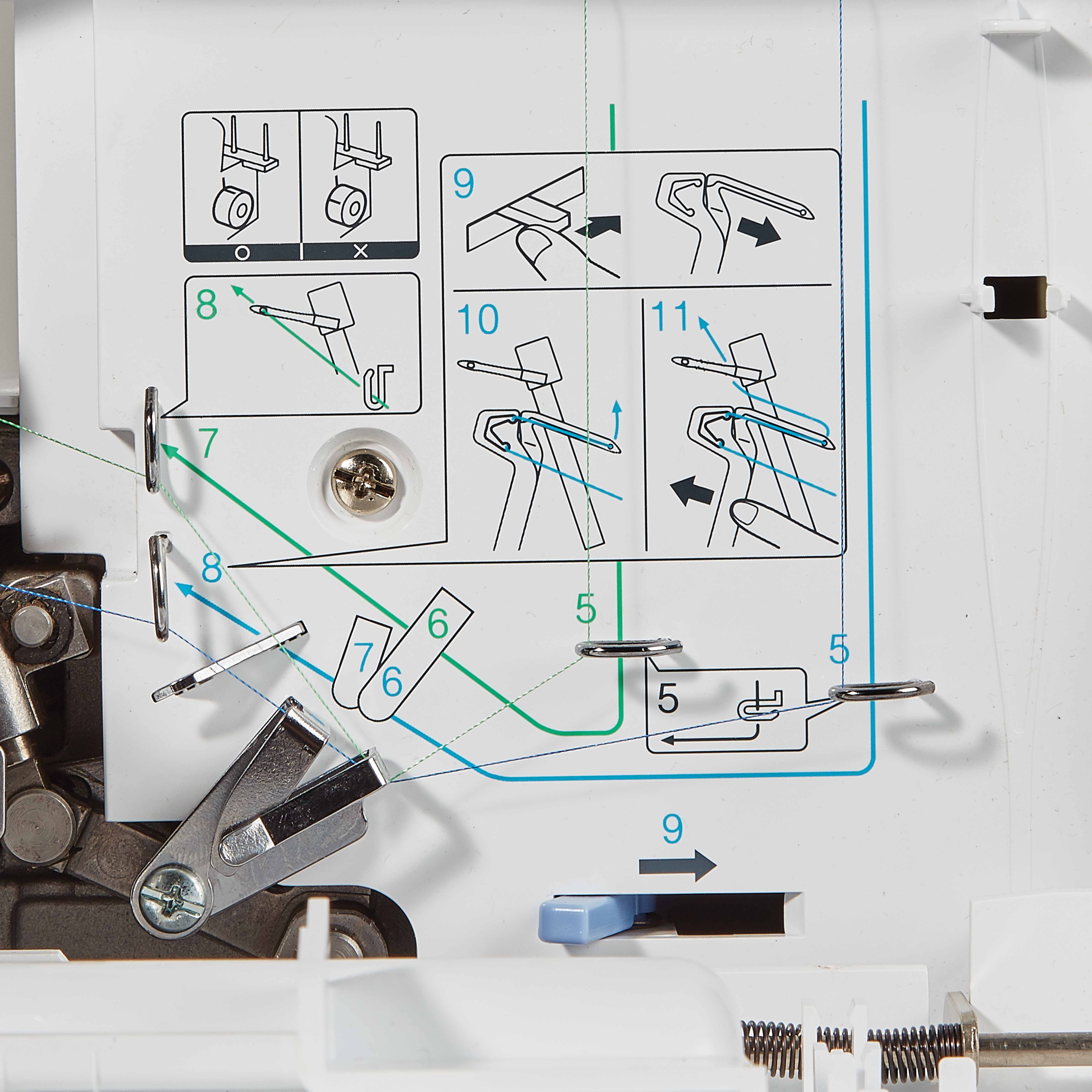
The lower looper is normally one of the more difficult parts of an overlocker to reach.
Brother’s F.A.S.T. system uses a blue lever to move the lower looper toward the front of the machine.
Pass the thread through the marked guides, return the mechanism to its sewing position and continue along the colour-coded route.
F.A.S.T. threading improves access to the lower looper. It is not an air-threading system and does not thread the machine automatically.
Rolled hemming wraps thread tightly around a narrow fabric edge, creating a light decorative finish.
The 2504D converts to a rolled-hem setting without replacing the complete needle plate.
Adjust the stitch length, differential feed and thread tensions for the material and finish required.
Presser-foot pressure determines how firmly the fabric is held against the feed dogs.
Reduce pressure for selected fine, soft or easily stretched materials and increase it when firmer control is required.
Presser-foot pressure works together with differential feed, stitch length and thread tension to improve seam quality.
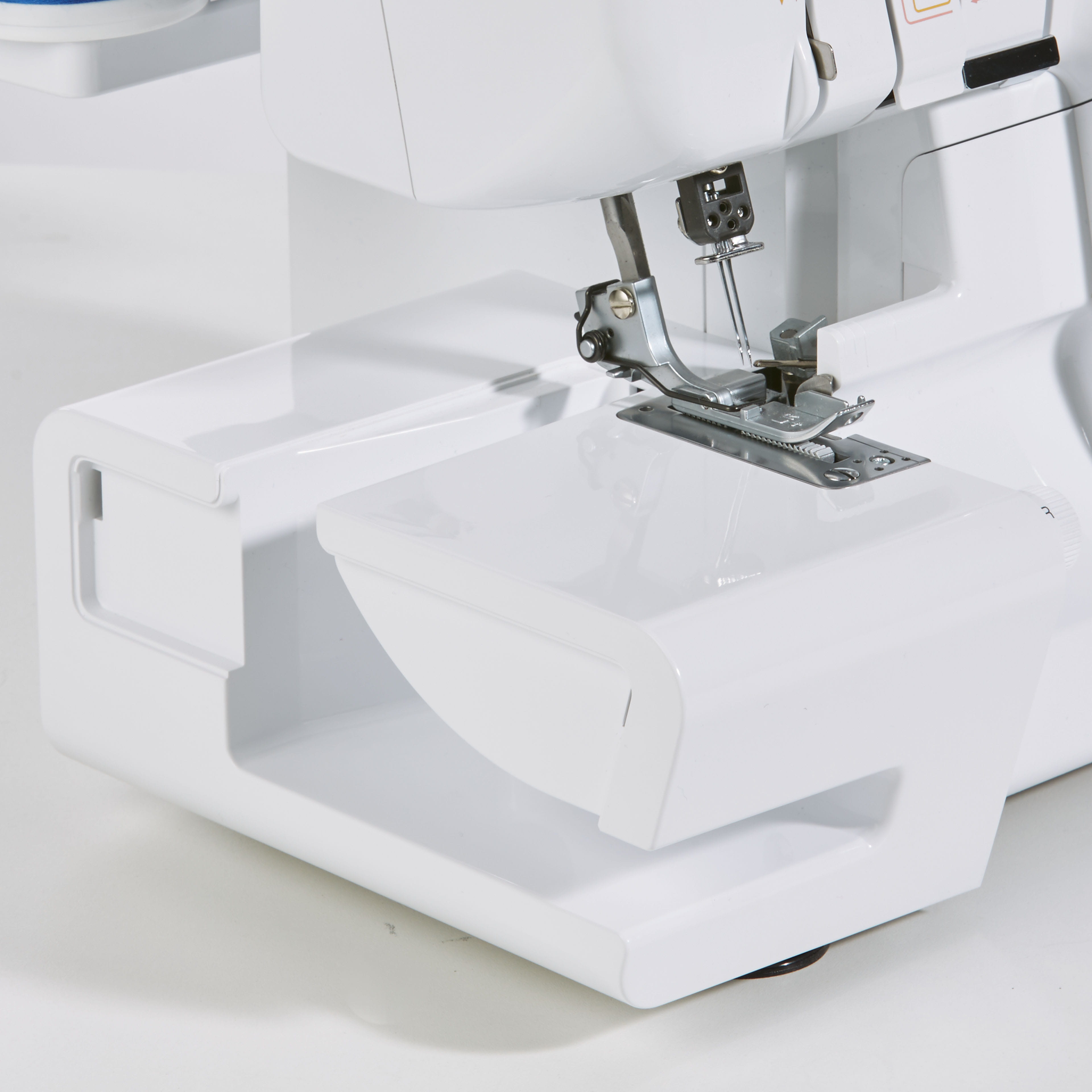
Remove the accessory compartment to expose the free arm for cuffs, trouser legs, children’s garments and other circular areas.
Refit the compartment to restore a larger flatbed surface during ordinary overlocking.
The LED light illuminates the needles, presser foot, cutting line and fabric edge.
Better visibility is particularly helpful with dark fabrics, matching thread and narrow seam allowances.
The New Zealand and Australian regional package includes a blind-stitch foot alongside the standard overlocker foot.
The blind-stitch foot can help guide folded fabric for blind hemming and selected flatlock techniques.
A trim trap fits beneath the cutting area to collect fabric and thread waste while sewing.
The Brother 2504D is particularly useful for fabrics that benefit from flexible seams and clean raw-edge finishing.
Always test the selected stitch, tension, differential feed and cutting width on a project offcut before sewing the finished garment.
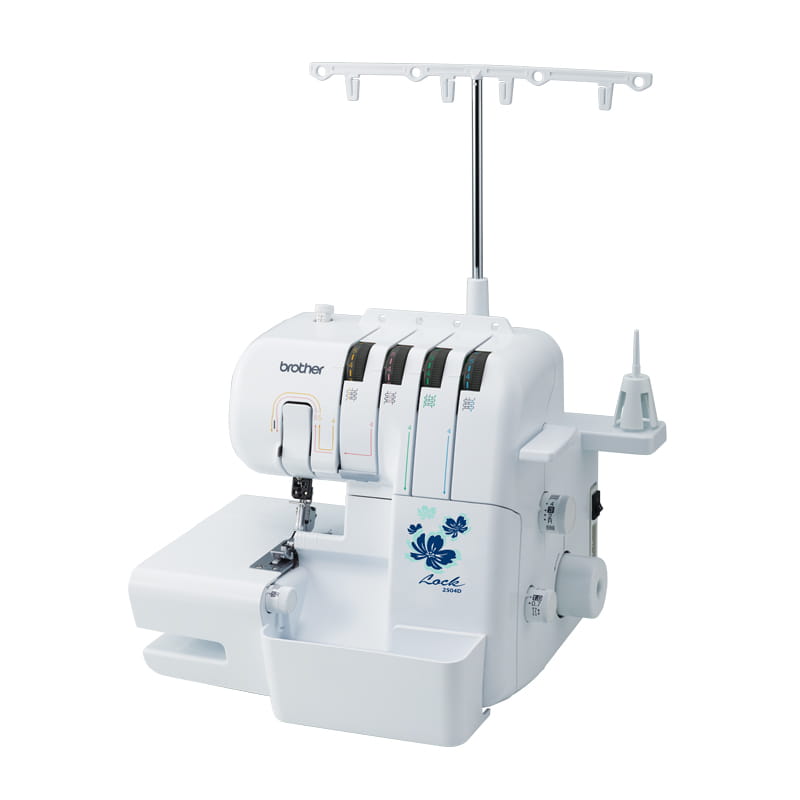
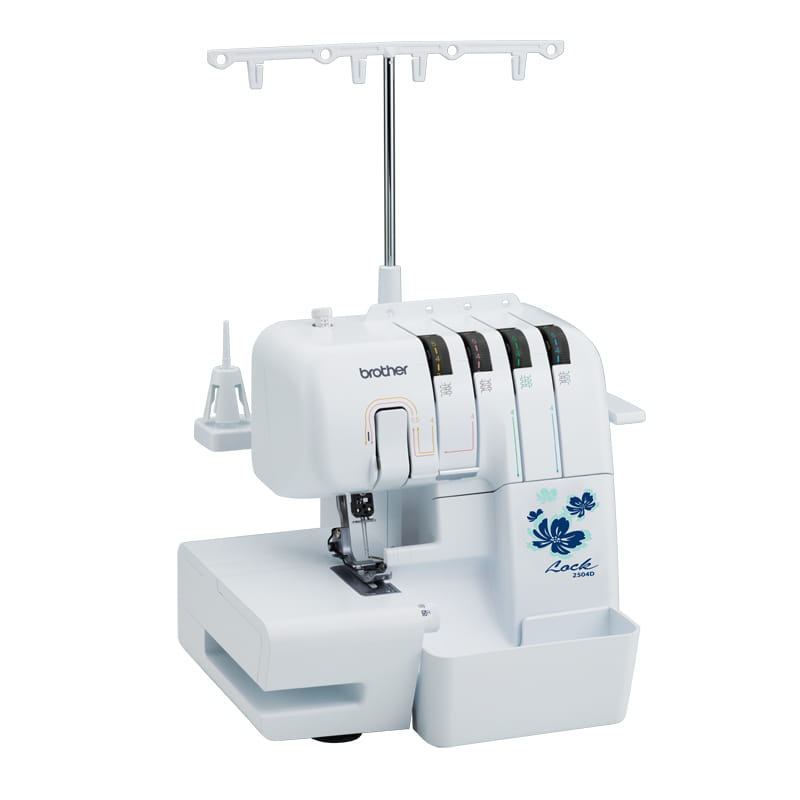
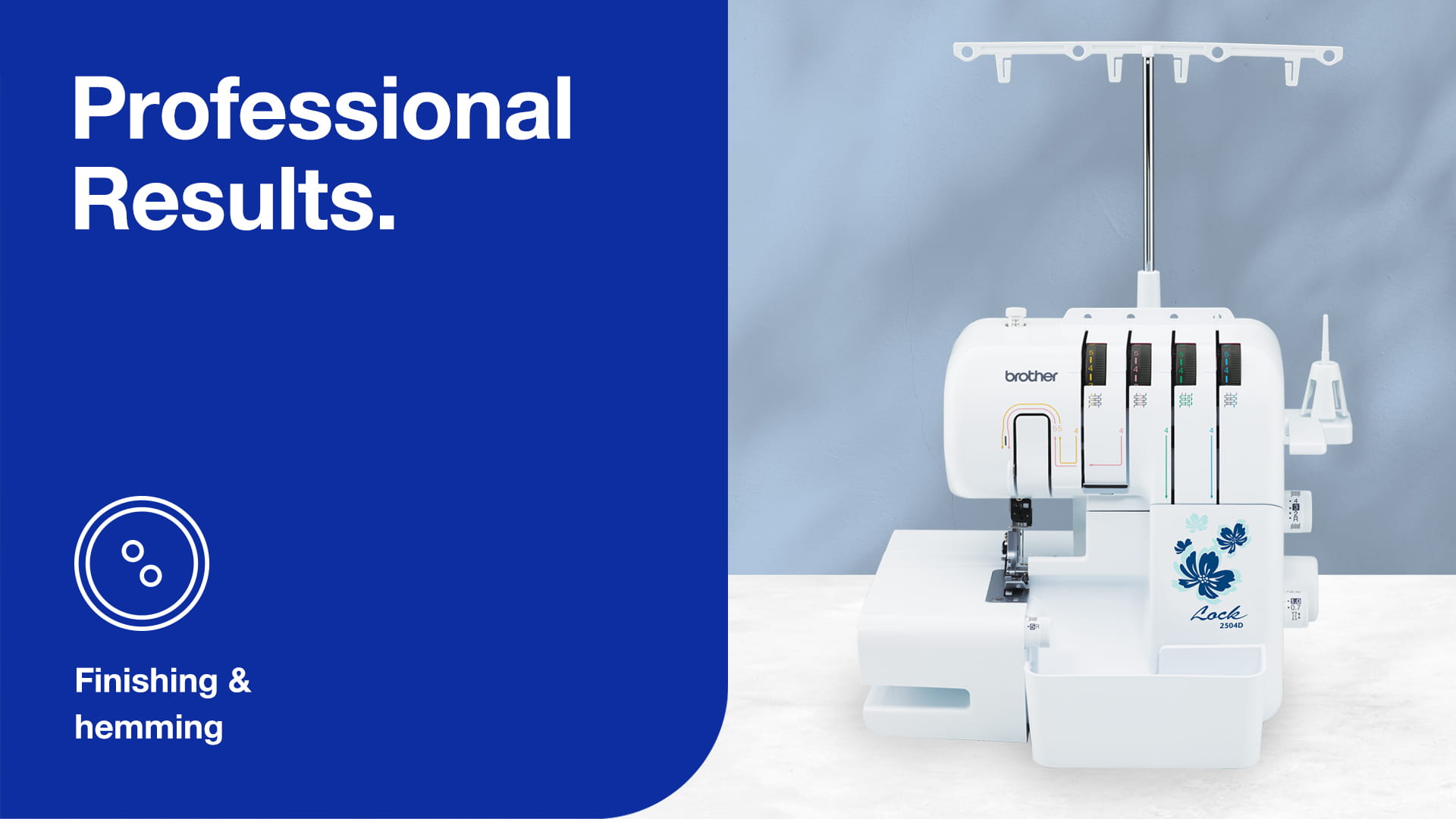
| Brother 2504D | A dependable 3 and 4-thread overlocker with F.A.S.T. lower-looper access, differential feed, free arm and blind-stitch foot. |
|---|---|
| Brother 4234D | Adds two-thread capability, a built-in needle threader and a more advanced feature set. |
| Brother Airflow 3000 | Adds push-button electric air threading for both loopers, assisted needle threading and premium convenience features. |
| Best reason to choose the 2504D | It delivers the essential stitches and fabric controls most home garment makers need at the most accessible price. |
The Brother 2504D is a conventional threaded overlocker. It does not use air threading.
The F.A.S.T. lower-looper system improves access to the looper but does not thread the machine automatically.
The 2504D does not have a built-in needle threader. The needles are threaded manually.
It creates three and four-thread stitches only. It does not produce two-thread stitches.
Each thread tension is adjusted manually using its individual dial.
It does not sew an ordinary lockstitch, zigzag, buttonhole or coverstitch hem.
Correct threading order, needle choice, tension, cutting width and differential-feed settings all affect stitch quality.
The optional wide table is not included in the standard package.
| Machine type | Domestic three and four-thread overlocker |
|---|---|
| Thread configurations | Three and four-thread overlocking |
| Number of needles | Up to two needles |
| Air threading | No |
| Needle threader | No, needles are threaded manually |
| Lower-looper threading | Brother F.A.S.T. accessible lower-looper system |
| Threading guide | Four-colour lay-in threading system |
| Maximum sewing speed | Up to 1,300 stitches per minute |
| Stitch-length range | Approximately 2 to 4mm |
| Overlock width | Approximately 5 to 7mm depending on the selected stitch and needle position |
| Differential feed | Adjustable from approximately 0.7 to 2.0 |
| Thread tension | Independent manual upper dials |
| Presser-foot pressure | Manually adjustable |
| Fabric cutting | Built-in trimming knives |
| Rolled hemming | Yes, with built-in rolled-hem conversion |
| Free arm | Yes |
| Flatbed sewing | Yes |
| Sewing light | LED |
| Presser feet | Snap-on system |
| Standard foot | Included |
| Blind-stitch foot | Included |
| Trim trap | Included |
| Foot controller | Included |
| Wide table | Available separately |
| Machine cover | Soft cover included |
| Approximate machine weight | Approximately 5.6kg |
| Coverstitch capability | No |
| Ordinary lockstitch sewing | No |
No. It uses conventional colour-coded threading with Brother’s F.A.S.T. accessible lower-looper system.
A blue lever moves the lower looper into a more accessible position so it can be threaded more easily.
No. The needles are threaded manually. The Brother 4234D adds a built-in needle-threading system.
No. The 2504D creates three and four-thread stitches.
Four-thread overlocking is commonly used because it creates a strong, flexible seam that moves with the garment.
Yes. Three-thread overlocking is commonly used to finish raw edges on woven fabrics.
Yes. It can create compact rolled edges on suitable fine and lightweight fabrics.
It changes the relative movement of the front and rear feed dogs to control stretching, puckering or gathering.
Correct differential feed, presser-foot pressure and tension settings can greatly reduce unwanted waviness.
Yes. Remove the flatbed accessory compartment to expose the free arm.
Yes. A blind-stitch foot is included with the regional standard package.
Yes. The trim trap collects fabric and thread waste beneath the cutting area.
No. Each thread tension is adjusted using an individual manual dial.
Maximum sewing speed is up to approximately 1,300 stitches per minute.
Yes. Four-thread overlocking and differential feed make it suitable for many activewear and stretch fabrics.
No. A dedicated coverstitch machine is required for the twin or triple parallel hem seen on T-shirts.
Yes. A sewing machine remains necessary for straight stitching, zips, buttonholes, top stitching and general construction.
Yes. The clear colour-coded threading route, lay-in guides and accessible lower looper make it a practical first overlocker.
The 4234D adds two-thread stitches, a built-in needle threader and a more advanced feature set.
The Airflow 3000 is the stronger option when push-button electric looper threading and maximum threading convenience are the priority.
It can suit home-based garment making and smaller production runs. Continuous high-volume production may require an industrial overlocker.
View the current New Zealand product information, regional warranty and compatible accessories.
Access manuals, threading instructions, maintenance information and troubleshooting guidance.
Review the complete feature set, included accessory package and official product imagery.
Direct Sewing has supplied sewing, overlocking, coverstitch, embroidery and industrial equipment throughout New Zealand since 2001.
Our experienced team can explain threading, tension, differential feed, rolled hemming and the practical differences between the Brother 2504D, 4234D and Airflow 3000.
Your Brother 2504D is supported by genuine New Zealand warranty assistance and our own in-house technical workshop. Servicing and repairs are completed by experienced sewing-machine technicians with decades of industry knowledge.
For garment makers wanting an affordable, dependable and easy-to-understand first overlocker, the Brother 2504D delivers the essential stitch options, speed and fabric control needed for professional-looking home sewing.